From Riyadh, Saudi Arabia
When the Gulf paid in Indian rupees
In the 1950s, Kuwait, Bahrain, Qatar and the Trucial States used the same rupee notes as India. Gold smuggling changed that, and in 1959 India printed special rupees for them, with serial numbers starting with Z.
By Anas Ismail
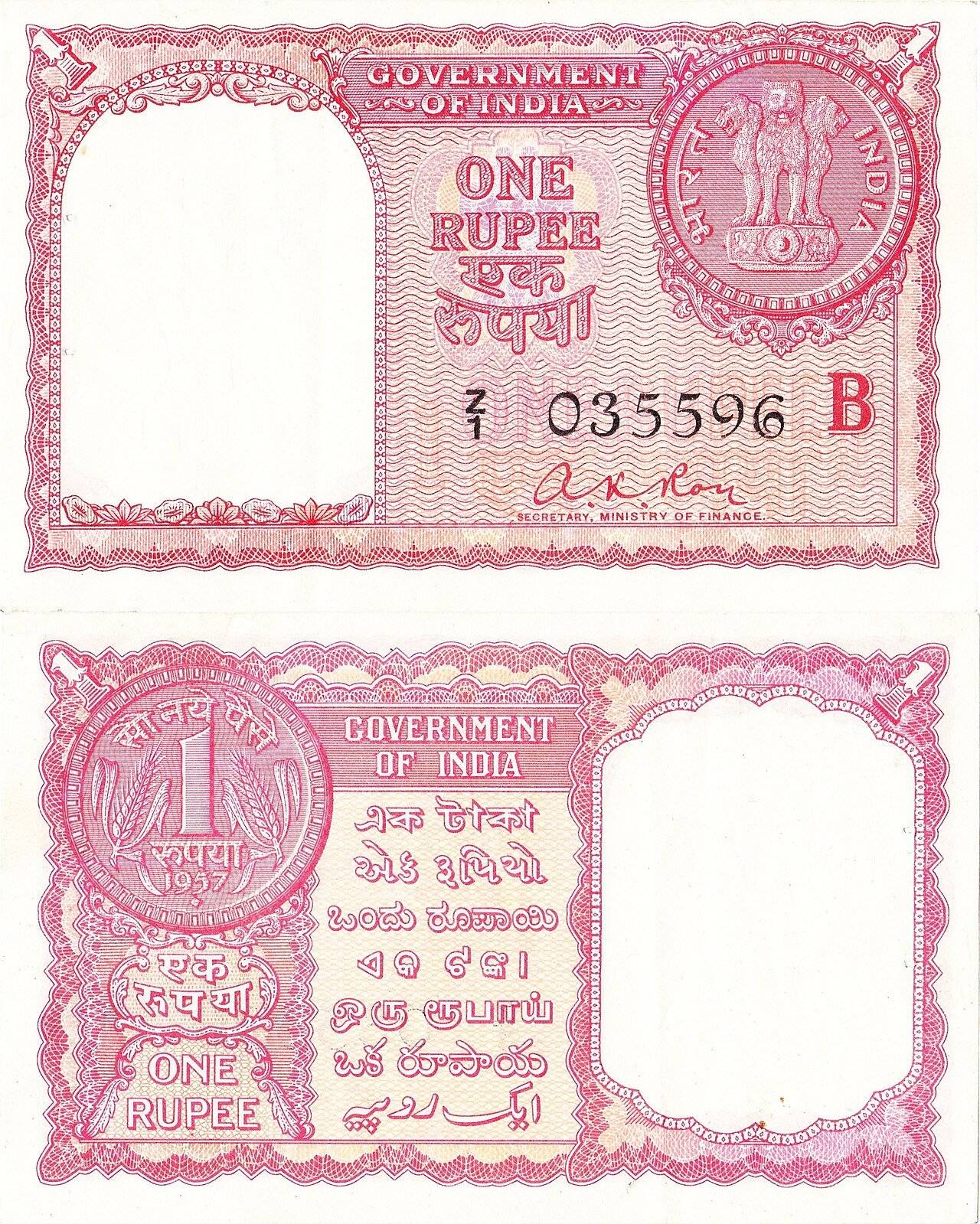
In the 1950s, a traveller from India could visit Kuwait, Bahrain, Qatar, Oman or the Trucial States, which are now the United Arab Emirates, and pay for almost everything in Indian rupees. Then, in 1959, India printed rupees that were not meant to be spent in India at all.
One currency, two coasts
The arrangement went back to the time when the British ruled India. The Gulf states paid for their rupees in pounds sterling. Banks in the Gulf could also send Indian notes to the Reserve Bank of India and receive foreign currency in return.
That second part became the problem. After independence, India was short of foreign exchange. Smugglers sent young men to the Gulf with rupee notes to buy gold, and the gold was brought back to India. The rupees left behind in the Gulf were sold back to the Reserve Bank, and India paid for them in sterling. Peter Symes, an Australian expert on paper money, wrote in 1999 that the smuggling reached alarming proportions in 1957 and 1958. Scroll.in, citing a New York Times report of April 1959, says India paid the equivalent of 92.4 million dollars in sterling for rupees presented in the Gulf in 1957 alone.
A note with a Z
The answer was a bill, which went to the Lok Sabha on 27 April 1959. The finance minister, Morarji Desai, was responsible for it. Symes wrote that it surprised the members of parliament, because it came without warning. President Rajendra Prasad gave his assent on 1 May 1959.
The new notes kept the design of the time but were printed in a different colour, and every serial number began with the letter Z. There were notes of one, ten and a hundred rupees. A Gulf rupee was worth the same as an Indian rupee, but the notes could be redeemed only at the Reserve Bank’s office in Bombay. People called them Gulf rupees or External rupees. Anyone in the Gulf holding ordinary Indian notes had six weeks to change them, and after that the ordinary notes were no longer accepted there.
Notes for the pilgrimage
The Haj raised the same worry. Indians going on the Haj took rupees with them and changed them for Saudi riyals. So the government also issued ten-rupee and hundred-rupee notes for Indian pilgrims to use in Saudi Arabia, with the word HAJ on the front and serial numbers beginning with HA. According to Scroll.in, a Haj rupee was exchanged for one Saudi riyal in the early 1960s.
One of the pilgrims who used them was Haji Siddique Mohammed, a retired railway employee from Mangalore, who went on the Haj in 1963. He told Scroll.in that he had kept a couple of the notes but lost them when he moved out of his official quarters after he retired.
One by one
The Gulf states began to leave. Kuwait brought in its own currency in 1961, and Bahrain followed a few years later. In June 1966 India devalued the rupee, and the rate against the US dollar went overnight from 4.76 rupees to 7.50. Some Gulf rulers asked the British government to step in, and were refused. Within months, Qatar and Dubai dropped the Gulf rupee, used Saudi riyals for a time, and then issued their own riyals at the rupee’s old value. Most of the other Trucial States followed, and Abu Dhabi took up the Bahraini dinar. Rupees issued by the Reserve Bank stayed in use longest in Oman, mostly in its ports, until a new rial replaced them in May 1970. The Haj notes were discontinued when the Gulf notes were withdrawn.
From pockets to albums
Today the notes belong to collectors. In 2021, Scroll.in reported auction prices at Spink & Son ranging from 120 pounds, plus tax, for a ten-rupee Gulf note to 44,000 pounds for a hundred-rupee Haj note. In the early 1960s, a pilgrim could change one of those hundred-rupee notes for a hundred riyals.
Anas Ismail
Planning a visit? Things to do in Dubai today, on Safrova Travel
Sources
- Reserve Bank of India, Museum, “Persian Gulf Issues”. Accessed
- Reserve Bank of India, Museum, “Haj Issues”. Accessed
- Scroll.in, Ajay Kamalakaran, “Gulf rupee: When the Reserve Bank of India played central banker in West Asia”.
- Wikimedia Commons, “India Gulf Rupee 1957.jpg”, photo by Awmcphee. Accessed
